
Iceland
Affiliate Disclosure: This site contains affiliate links. If you purchase, sign up, or book through these links, I may earn a commission at no extra cost to you.

Iceland At A Glance
Iceland, the “Land of Fire and Ice” is truly otherworldly. Astronauts have been training here since the 1960s due to its landscape closely resembling the moon’s surface.
I thought I was prepared for how surreal Iceland was going to be, but I wasn’t. It was unlike any place I’d ever seen before. The landscape is utterly breathtaking and beautiful and almost alien, with massive glaciers, volcanoes, geysers, black sand beaches, dramatic coastlines, powerful waterfalls, and northern lights.
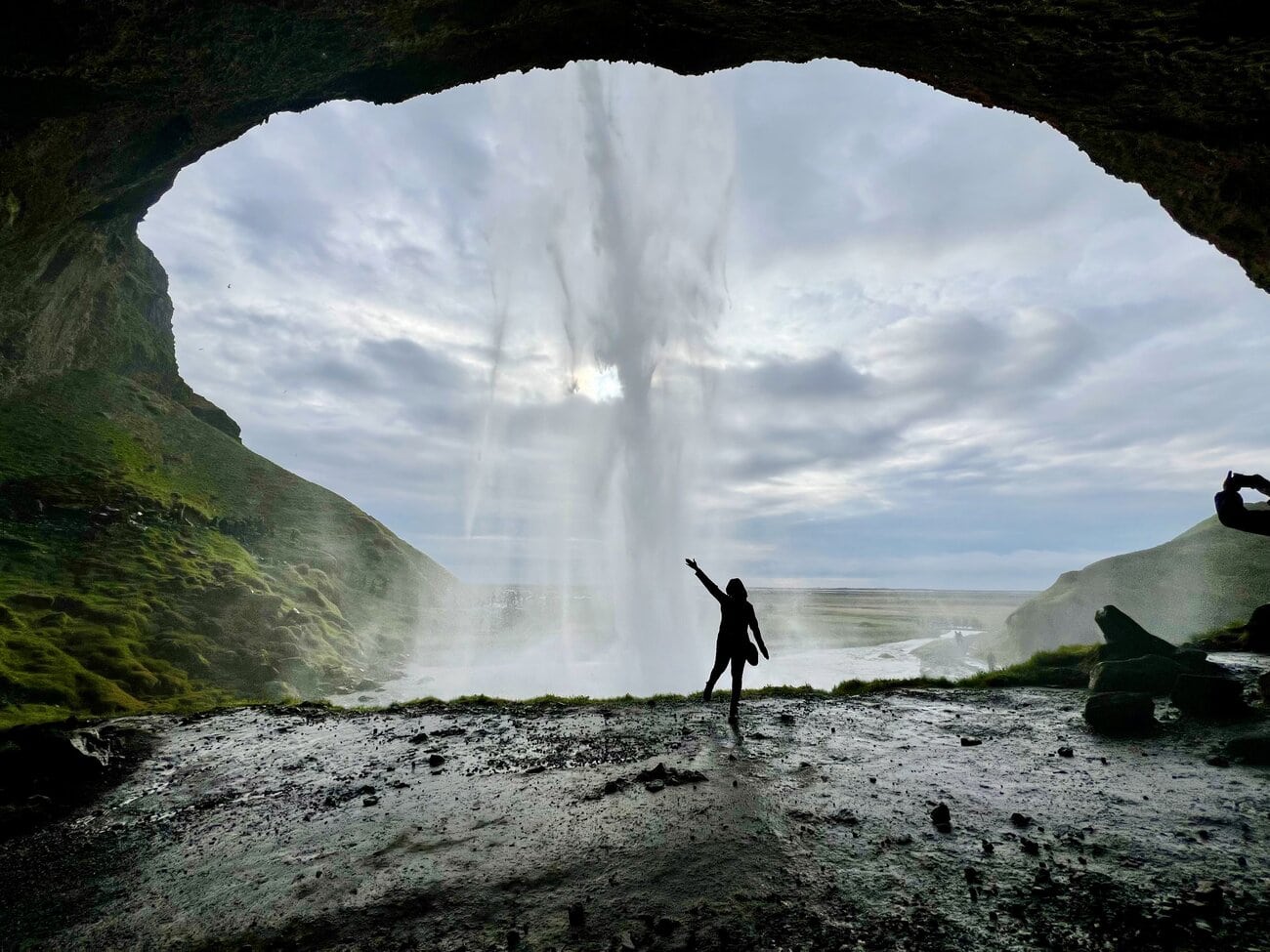
Standing inside the Seljalandsfoss waterfall with mist from cascading water soaking through my rain jacket, while watching the sunset over vibrant green moss-covered lava fields was unforgettable. Hiking through the famous Katla Ice Cave’s electric blue ice tunnels and rubbing volcanic ash between my fingers from past eruptions was surreal. I quickly came to understand why people call it the “Land of Fire and Ice.”
It’s the only way to describe a place where you can soak in a geothermal hot spring while watching the Northern Lights dance above glaciers that are on top of active volcanoes.
Iceland has to import most goods, so accommodations, restaurants, and groceries can be expensive. I learned strategies to experience bucket-list adventures like glacier hiking, walking between North American and Eurasian tectonic plates, and Game of Thrones filming location tours while finding affordable and comfortable accommodations.
Iceland proves that dramatic, once-in-a-lifetime destinations are accessible for solo travelers on realistic budgets. I’ll share what I’ve learned about experiencing Iceland’s incredible landscapes sustainably and affordably.
Language:
Icelandic
Nearly everyone in Iceland speaks English, especially in Reykjavik and tourist areas. Icelandic is the official language, but you’ll have no trouble communicating. Learning a few Icelandic phrases like “takk” (thank you) is appreciated but not necessary.
You can use language learning tools like Pimsleur, and if you want to learn basic Icelandic, or Preply to work with a tutor one-on-one before your trip.
Pimsleur Preply
Currency:
Icelandic Króna (ISK)
Iceland uses the Icelandic Króna. While some tourist businesses accept Euros or USD, you can expect poor exchange rates. Credit cards are accepted almost everywhere but carrying cash for remote areas is a good idea.
Best Time to Visit:
Iceland is stunning all year-round, but the weather is well known to be unpredictable. Icelanders often say, “If you don’t like the weather, wait five minutes”. Pack layers regardless of season.
Spring (March-May): Shoulder season with fewer tourists, lower prices, and Northern Lights still visible through March. The weather can be very unpredictable. Temperatures range 30-50°F (-1 to 10°C). Some roads will still be closed, but a good time for exploring Reykjavik and southern coast attractions.
Summer (June-August): Midnight sun and warmest weather of the year (50-60°F / 10-15°C). All roads and highland routes should be open for hiking and camping. Prime season for whale watching and puffin spotting. This is peak tourist season, so higher prices and crowded attractions. Book accommodations and popular tours (glacier hikes, ice caves) 2-3 months ahead.
Fall (September-November): Northern Lights season begins (September onwards) with fewer crowds, lower prices, and short-lived fall colors. Weather becomes more unpredictable. Temperatures typically range 35-50°F (2-10°C). Some highland roads close by October.
Winter (December-February): Prime for viewing the Northern Lights, ice cave tours, winter landscapes, and the lowest prices. Has the shortest days (4-5 hours of daylight in December). Temperatures typically range 25-40°F (-4 to 4°C) but feels colder with wind. Limited daylight means fewer sightseeing hours, so book ice cave tours and Northern Lights tours well ahead of time. It’s often advised to consider guided tours over driving yourself.
Always check weather forecasts and road conditions. Iceland’s weather can change within hours.
Famous Landmarks:
Blue Lagoon, Northern Lights, Seljalandsfoss & Skógafoss Waterfalls, Jökulsárlón Glacier Lagoon, Golden Circle (Þingvellir, Geysir, Gullfoss), Black Sand Beaches (Reynisfjara)
Iceland Blogs + Travel Guides
Planning a trip to Iceland? Skip the overwhelm.
I’m currently writing blogs and detailed guides for adventures across Iceland below. Each guide includes great hotels from budget to affordable luxury, must-try restaurants and local food, day trips not to miss, safe neighborhoods for solo female travelers, public transit tips, honest assessments about traveling as a person of color, local events and concerts, and souvenirs worth precious suitcase space.
My goal is to help you explore based on YOUR travel style and interests to experience both the famous spots everyone talks about AND the authentic hidden gems only locals know.
Sign up for the Travel Like You Mean It (TLYMI) Newsletter to be notified when these guides launch, plus receive travel tips and guides for planning adventures in other countries.
Subscribe Now
Iceland Posts
No posts